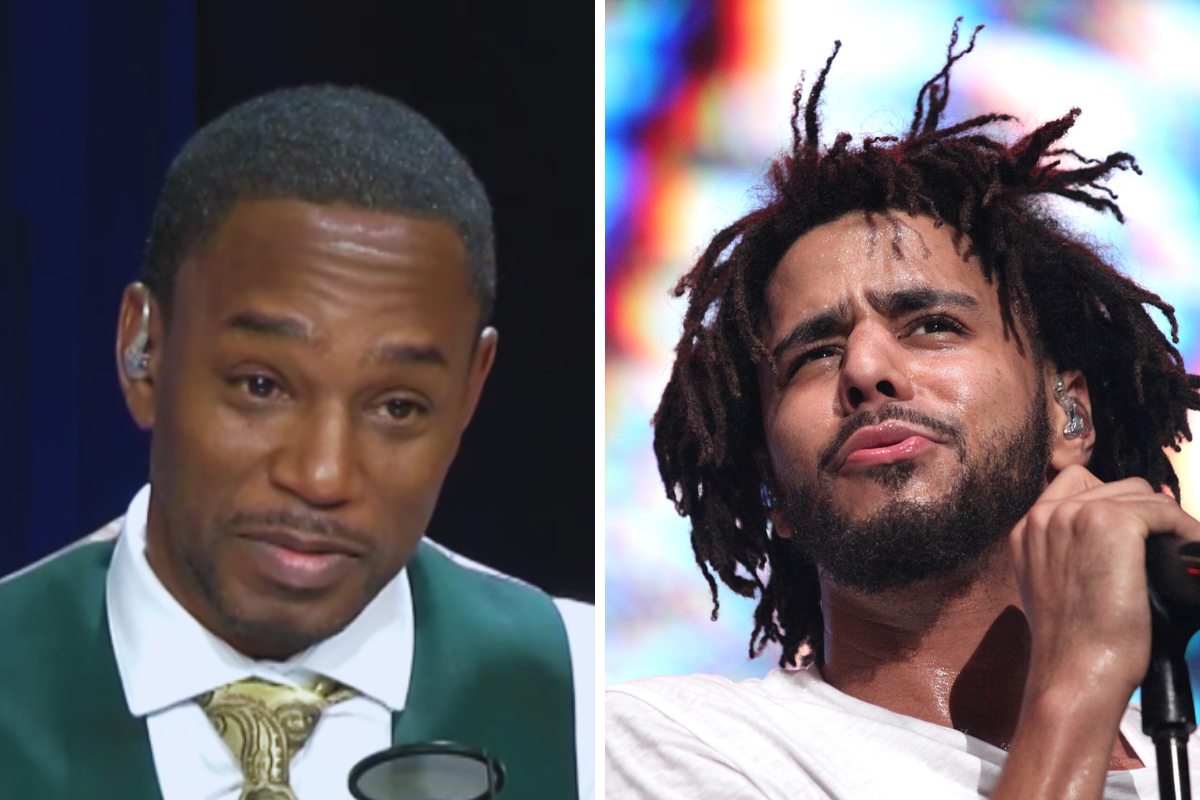
J. Cole is vehemently denying Cam’ron’s allegations regarding “strings attached” to his verse on “Ready ’24,” urging the court to dismiss the ongoing lawsuit and reject all ownership demands.
The Dreamville co-founder is pushing back hard against Cam’ron’s assertion that their collaboration came with a hidden agreement for a future feature or a podcast appearance as a condition for the verse.
In legal documents obtained by AllHipHop, J. Cole and his company, Cole World Inc., assert that Cam’ron “voluntarily and without condition appeared as a featured performer/lyricist on his single verse on Cole’s recording of ‘Ready ‘24’ in New York City." They explicitly deny that any conditions were attached to the 2022 studio session.
Cole’s legal team emphasized that Cam’ron never raised objections before the track’s release on Cole’s 2024 project, Might Delete Later. This suggests that the issues arose well after the initial collaboration.
J. Cole’s lawyers did concede that the two artists “would have discussions about the possibility of Cole working with [Cam’ron] on one of his songs, but no commitment was ever made to do so nor was there any agreement or condition related to ‘Ready ’24’ to do so.” This clarifies that casual conversations did not translate into binding agreements.
The filing also rejected any claim that J. Cole promised to appear on Cam’ron’s podcast “It Is What It Is,” stating, “no commitment was ever made by Cole to do so nor was there any agreement or condition related to ‘Ready ’24′ to do so.” This directly counters a key aspect of Cam’ron’s suit.
J. Cole frames Cam’ron’s contribution as a standard feature, one that he asserts Cam’ron “encouraged and blessed [J. Cole’s use of his performance, as it was to his career benefit.” He alleges that Cam’ron only later began to demand “unreasonable conditions never agreed to by Cole, or an excessive fee inconsistent with industry standards.”
According to Cole, these demands were followed by the lawsuit itself, which he characterizes as an attempt “to publicly disparage Cole as leverage.” J. Cole is seeking to have the case thrown out, a declaration that Cam’ron has “no ownership interest” in the “Ready ’24” sound recording, and a ruling that he has no right to an accounting or any other equitable relief.
The Business of Bars: What This Lawsuit Means for Hip-Hop
This legal battle between J. Cole and Cam’ron highlights a perennial issue within the hip-hop industry: the often-unwritten rules and expectations surrounding feature verses. While the genre thrives on organic collaborations and mutual respect, this case underscores the increasing necessity for clear, documented agreements, even between established artists.
The dispute over whether a feature is a standalone contribution or a quid pro quo arrangement could set a significant precedent. It forces artists to consider the implications of every studio session and informal discussion, potentially leading to more formal contracts for guest appearances. This move towards greater contractual clarity, while possibly stifling some spontaneous collaborations, ultimately protects both parties from future misunderstandings and financial disputes.
This situation also mirrors past industry conflicts where verbal agreements fell apart, often leaving one party feeling exploited. In an era where streaming royalties and intellectual property are paramount, the outcome of this lawsuit could redefine how features are negotiated and valued, pushing for a more transparent and legally binding approach to one of hip-hop’s foundational practices.